
Case 01 · Face swap
One person's face on another person's head.
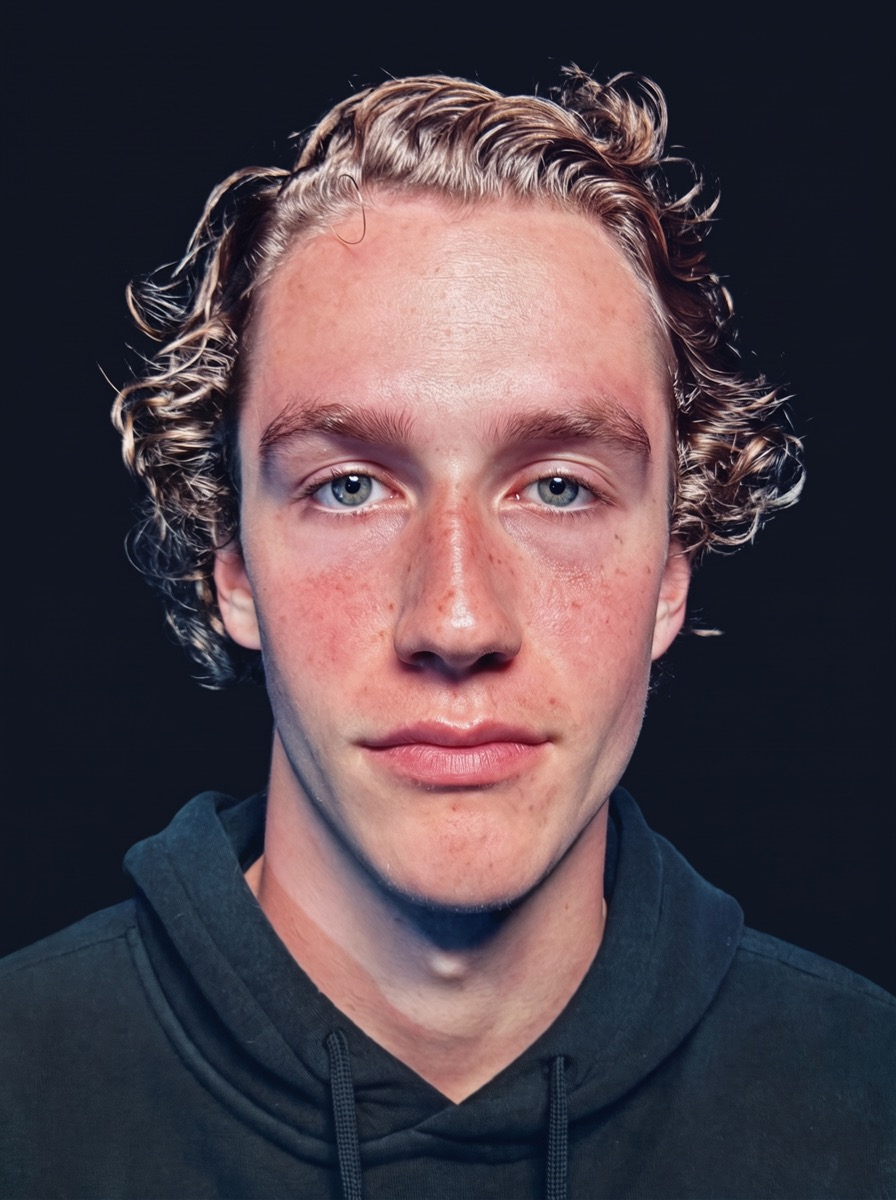
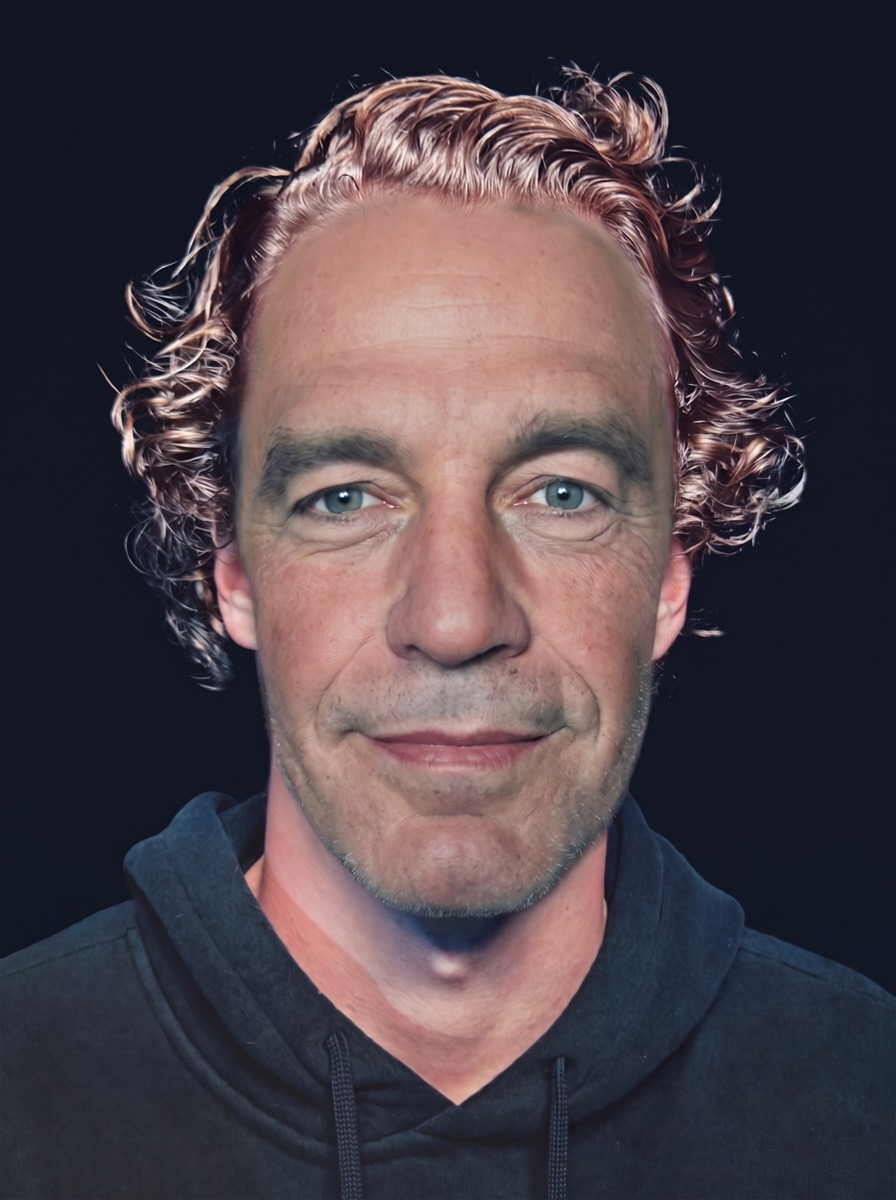
What a human reviewer might notice: a seam at the hairline and the jaw, and a face thirty years older than the hair.
Drag the handle to compare

This person wants to open an account.
He isn't real. He's a deepfake. The PXL Deepfake Detector catches him at onboarding.
This person does not exist.
Synthetic Face98.7 % confidenceFlagged by the PXL Deepfake Detector
PXL Deepfake Detector
A trained human reviewer can sometimes spot basic Deepfakes. Our Deepfake Detector sees far more than a human and also catches the attacks with no visible tell at all.
Customers who trust PXL Vision















Four fictional persons, four real manipulations. Made in an afternoon with tools anyone can subscribe to.
Case 01 · Face swap
What a human reviewer might notice: a seam at the hairline and the jaw, and a face thirty years older than the hair.
Drag the handle to compare

Case 02 · Face synthesis
What a human reviewer might notice: mirror symmetry, skin without a single pore, a smile too even to be a smile.
Move over the face to magnify


Case 03 · Face editing
What a human reviewer might notice: texture that changes around the eyes and the mouth, and nowhere else.
Scroll to age the face
Case 04 · Face reenactment
What a human reviewer might notice: a mouth and eyes that move out of sync with the head.
 Verify your identity
PXL Deepfake Detector at work
The user takes a selfie as usual. The verdict arrives with the confidence and the suspected manipulation type, before the damage happens.
An onboarding selfie is a controlled scene: one face, camera-facing, front-lit, captured live. General-purpose media detectors are built for anything, so they drift on this job. The PXL Deepfake Detector is tuned for that one scene.
It reads the captured image itself, so it makes no difference whether a manipulated face arrived through the phone camera, a virtual camera or an injected stream. Injection attack detection runs as its own layer in PXL Ident. And it checks the selfie, not the portrait printed on the document: morphing attacks on document photos are a separate check.
Where it fitsProblemA synthetic identity arrives as a plausible document and a face reenacted or generated to match it. A real person sits in front of the camera, so liveness passes.
DamageAn account that belongs to no real customer. It turns into a mule account, draws credit that is never repaid and leaves a KYC file the regulator can pick apart.
SolutionThe detector checks the selfie frame inside the onboarding flow, next to liveness and document verification, and a synthetic verdict blocks or routes the case before the account exists. For EU providers this is the step that eIDAS 2.0 and ETSI TS 119 461 expect remote identity proofing to defend.
ProblemA stolen or bought document paired with a swapped face is enough to activate, replace or port a SIM.
DamageThe SIM is the doorway to one-time codes for banking and email. One fraudulent activation turns into account takeovers elsewhere, and the telco carries the disputes and the financed handset that is never paid off.
SolutionThe detector checks the selfie at activation, replacement and porting. Telcos on PXL Ident switch it on without integration work.
ProblemAccount takeover increasingly starts with a reenacted face, driven from a profile photo or a scraped video, presented at a step-up check: a password reset, a new device, a large transfer.
DamageAn account that passed every check at onboarding is emptied under the genuine customer's name, and the dispute lands on your desk.
SolutionThe detector asks whether the face in front of the camera has been manipulated at all. Face matching only asks whether it is the same person. Together they close the gap either one leaves open.
ProblemMarketplaces, gig platforms and dating apps meet synthetic faces at scale: profiles built around a person who never existed.
DamageReal users get scammed by accounts that carry your verified badge, and a ring can run hundreds of them before anyone notices.
SolutionThe detector runs at profile verification and again on a schedule. A face later found in a ring can be traced to every account it fronted.
ProblemImpostor employees pass remote identity checks with a candidate's selfie swapped to match a purchased identity.
DamageSomeone you never vetted holds a company laptop and access to payroll and customer data from day one.
SolutionA deepfake check at the pre-employment identity step, before background checks are ordered, keeps the manipulated face from ever entering the record.
ProblemInsurers see aged or edited faces reused across policies, and synthetic policyholders who exist only as a document and a face.
DamageClaims paid to people who do not exist and policies written on invented lives, in a book of business you cannot trust when the audit comes.
SolutionWhere a claim or a policy change carries a selfie step, the detector flags the manipulated ones and routes them to manual review instead of straight-through processing.
ProblemFraud rings reuse the same synthetic face under new names, and each account passed onboarding on its own.
DamageA ring keeps operating across dozens of accounts, each one legitimate in isolation, until the losses are added up.
SolutionRunning the detector over stored selfies of high-risk accounts surfaces the repeats. Through the PXL Fraud Protection Network the pattern can be shared across providers before the next onboarding flow is hit.
 Synthetic, face reenactment
 Synthetic, face swap
 Synthetic, face editing
 Synthetic, face synthesis
 Synthetic, face swap
 Synthetic, face editing
 Synthetic, face swap